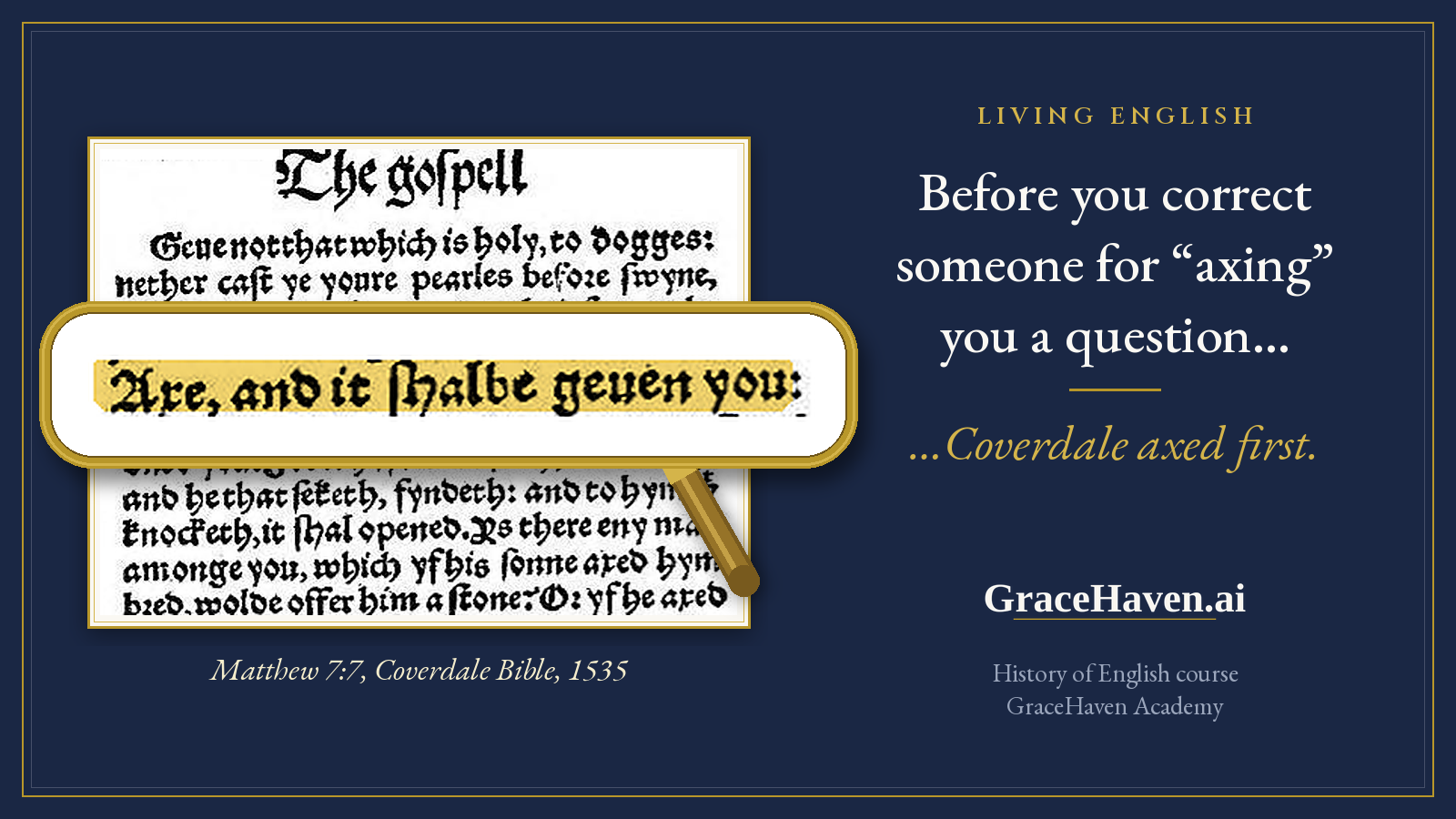
Before you correct someone for "axing" you a question, you might want to open a Bible printed in 1535. Here is Matthew 7:7 as Miles Coverdale printed it, spelling and all:
"Axe, and it shalbe geuen you: Seke, and ye shall fynde: knocke, and it shalbe opened vnto you."
That's not a misprint. A few lines down on the same page, "whosoeuer axeth, receaueth," and a son "axed" his father for bread. Coverdale wasn't being careless, and he wasn't alone. William Tyndale's New Testament has "axe" in the same verse. So does the older Wycliffite Bible. Geoffrey Chaucer, writing in London in the late 1300s, tells us in the Miller's Tale that "Men axed hym, what sholde bifalle."
So how did a word that good company used end up as something we correct?
A word with two shapes
Old English, the English spoken in England until about 1150, had the verb in two shapes, āscian and ācsian. Both came down into Middle English, as asken and axen, and writers used whichever came naturally. They spelled it several ways, too. The Middle English Dictionary lists axen, aksen, and aixe among its forms, and many dictionaries today write the spoken word ax. Say "sk" quickly enough and it can turn into "ks," which is what the x spells. Linguists call that kind of swap metathesis, and it happens in languages all over the world. Nobody in Chaucer's London thought one form was right and the other wrong.
Axe stayed an accepted written form until about 1600. You can watch the change in Coverdale's own work. When he oversaw the Great Bible of 1540, the verse read "Aske." The King James Bible of 1611 has "Aske" as well. The written standard settled on ask, and over the next few centuries axe got pushed into the "wrong" column, even though it's every bit as old.
Our History of English course meets this word in its very first chapter, in the middle of a story about eggs.
Eggs or eyren?
Sometime in the 1400s, a ship full of English merchants was stuck for lack of wind at a headland called the Foreland, on its way across the sea to Zeeland. The merchants went ashore. One of them, a cloth dealer named Sheffelde, walked into a house and asked for eggs. The good wife of the house told him she couldn't speak French. Sheffelde was angry, because he couldn't speak French either. He had asked in plain English. Then another man in the company asked for eyren (roughly "AY-ren"), and she understood him at once.
William Caxton, the man who brought printing to England, told this story in 1490 in the preface to a book he was about to print. His own sentence has our word in it: Sheffelde "cam in to an hows and axed for mete." In Caxton's day meat meant food of any kind. Chapter 1 stops right there to explain:
From the course: "(In Caxton's London axed was perfectly good English, going back to the Old English form ācsian, and plenty of English speakers still say it.)"
Then the chapter takes up a better puzzle: why did eyren get through to the good wife when eggs didn't? The answer runs back through Old English plurals, Danish settlers, and the way the word children still carries two layers of history in its ending. By the end of the chapter, you'll hear those layers every time you say it.
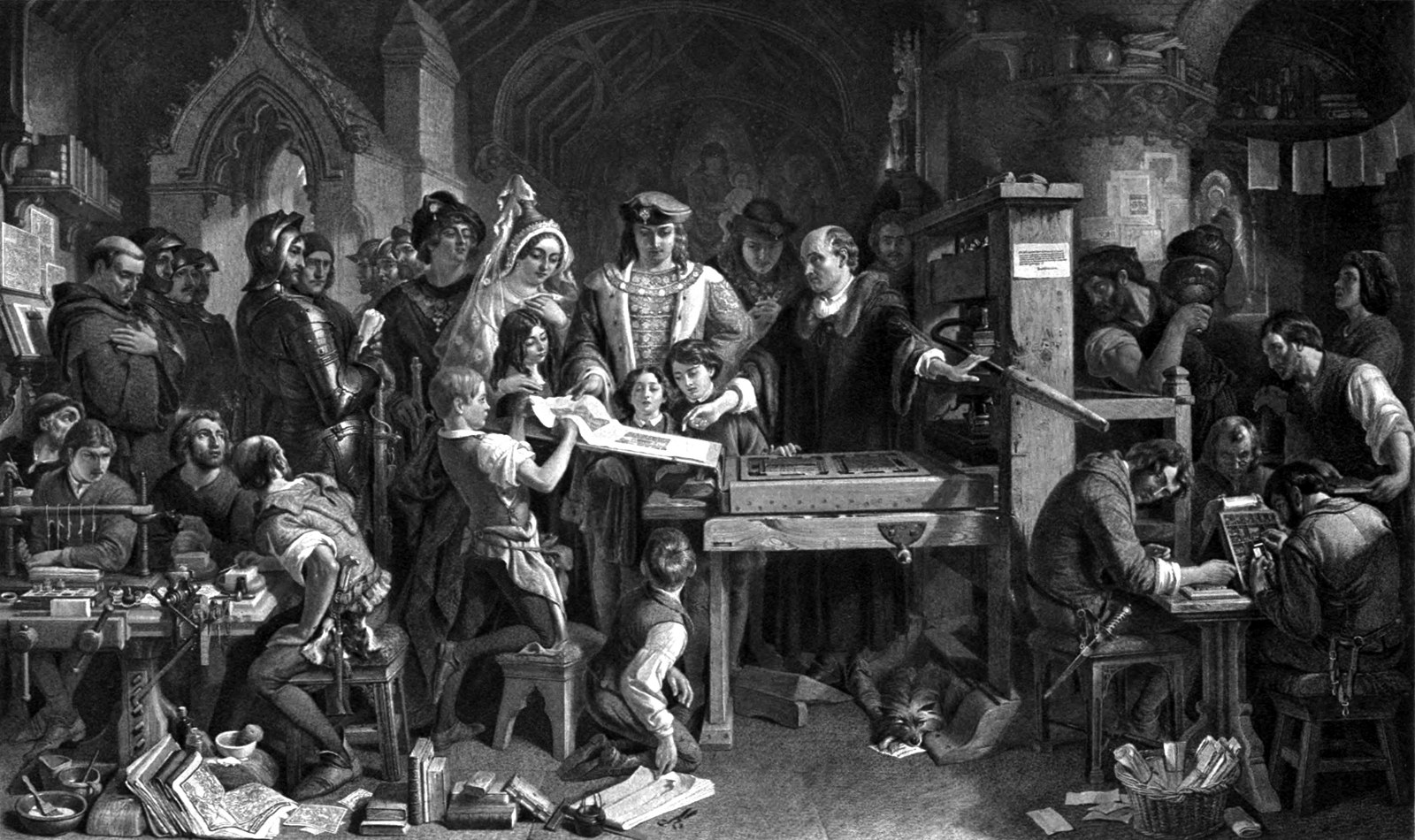
Caxton at his press, as Daniel Maclise imagined the scene in 1851: "Caxton Showing the First Specimen of His Printing to King Edward IV at the Almonry, Westminster." Public domain, via Wikimedia Commons.
The structure you already have
Chapter 1 is called "The Structure You Already Have," and the title is its argument. Old English did most of its grammar with endings. By Caxton's day most of those endings had worn away, and English did the same work with small words and word order. A handful of the old pieces survived, and we use them without thinking: the 's in a day's work, the difference between he and him, helpers like should and will, and old plurals like oxen. Even the -ed in Caxton's axed is one of those pieces, the regular way English still makes its past tense.
From the course: "You have used every one of these pieces since you first learned to talk, which is why the history of English grammar is really the history of a structure you already have."
That's the spirit of the whole course. You don't need to memorize a single rule to start. You already speak the language. The course shows you where its pieces came from.
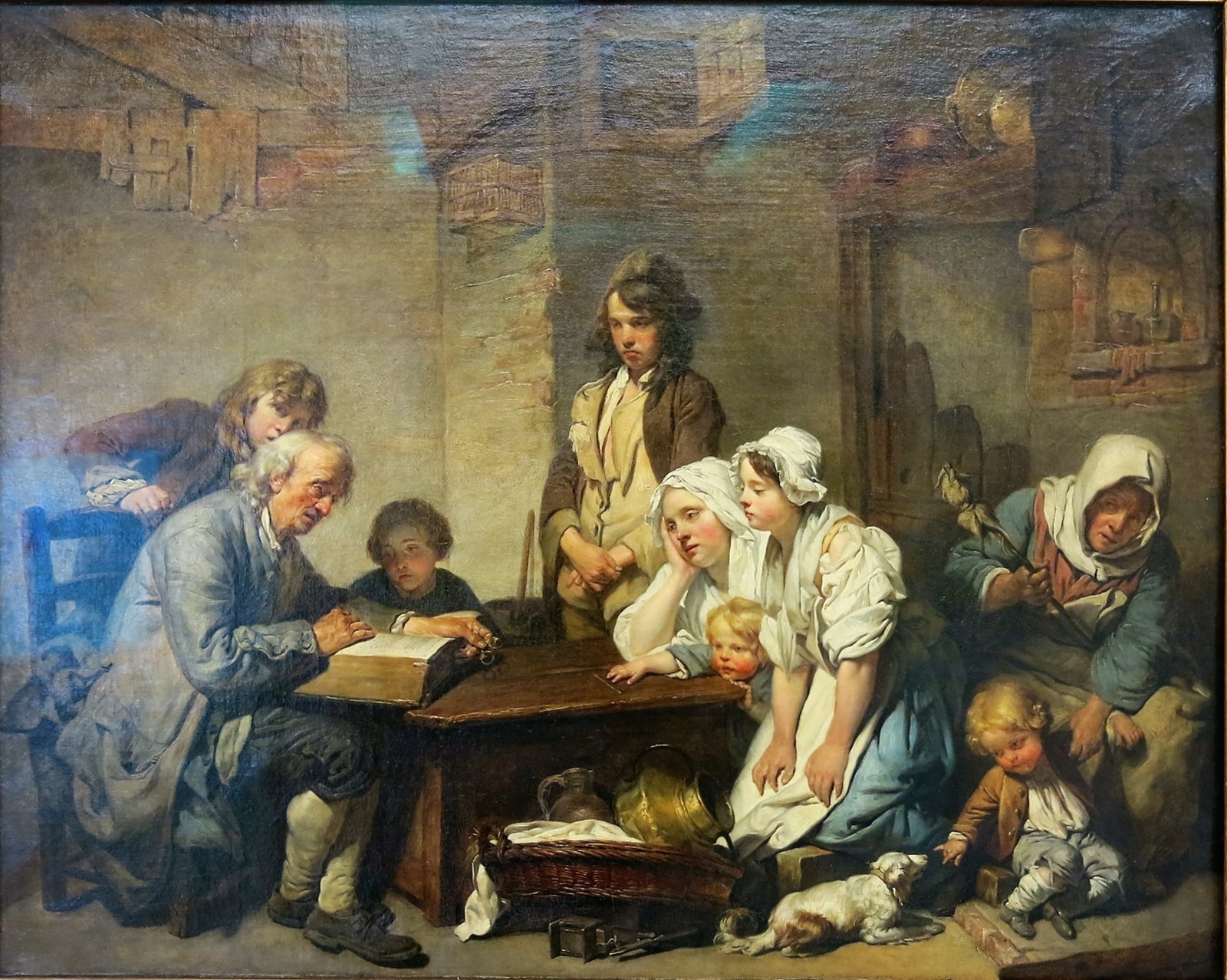
Jean-Baptiste Greuze, "Reading the Bible" (Louvre). A family listens as Scripture is read aloud at home. Painting public domain; photo by Tangopaso, released into the public domain, via Wikimedia Commons.
From the printer to the ploughboy
The chapter doesn't end with grammar. It follows Caxton's printing press to the most important book of all. Tyndale, who vowed that a boy who drives a plough would one day know more Scripture than a learned churchman, gave his life to put the New Testament into plain English. Coverdale published a whole English Bible of his own in 1535, the one with "Axe, and it shalbe geuen you" in it. Within a year of Tyndale's death, an English Bible made largely from his work could be bought and read anywhere in the realm.
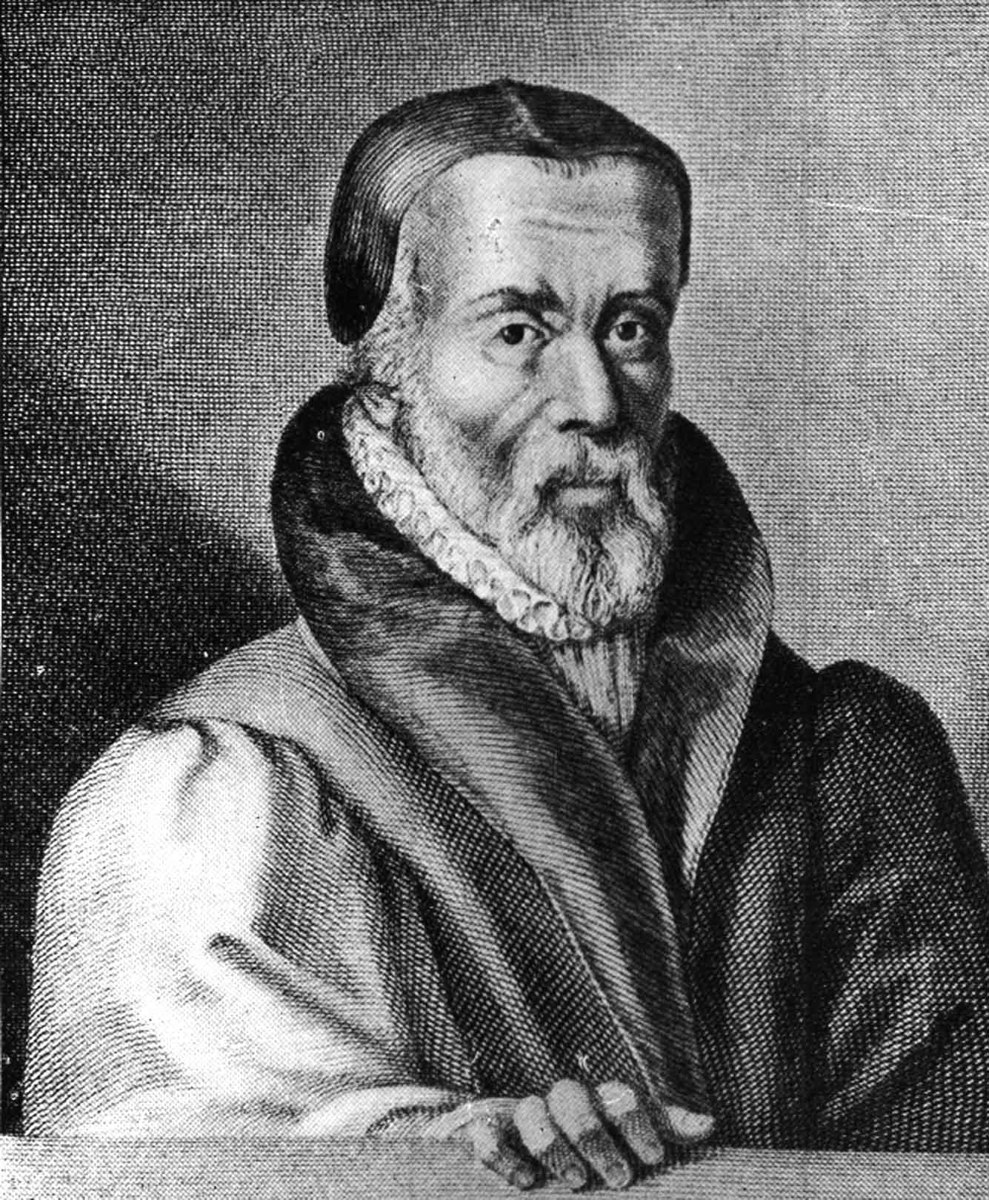
William Tyndale, who vowed that a ploughboy would know the Scripture. Engraved portrait, public domain, via Wikimedia Commons (credited there to Foxe's Book of Martyrs).
So the next time someone axes you a question, you might smile instead of correcting them. They're using a word Coverdale printed in the Gospel of Matthew. And the promise in that verse hasn't changed with the spelling.
From GraceHaven Academy: This story is part of the History of English course in GraceHaven Academy, which is on its way. Start free at GraceHaven.ai and look around the Academy preview.