Most economics curricula for children fall into one of two traps. Either they present free-market capitalism as unquestionable truth, or they present government intervention as obvious compassion. Both approaches produce students who can repeat a position but cannot defend it. That is not education. That is programming.
The Problem With Conclusions First
When a curriculum tells a child "the minimum wage hurts workers" or "the minimum wage protects workers," it has done the child's thinking for them. The child may memorize the claim. They may even be able to parrot the supporting argument. But they have not actually understood the economics. They have understood only that an authority figure told them something.
This is a problem regardless of which conclusion the curriculum favors. A child who believes in free markets because their textbook told them to is no better equipped than a child who believes in central planning for the same reason. Both will crumble the first time they meet a sharp mind on the other side.
Start With Principles, Not Positions
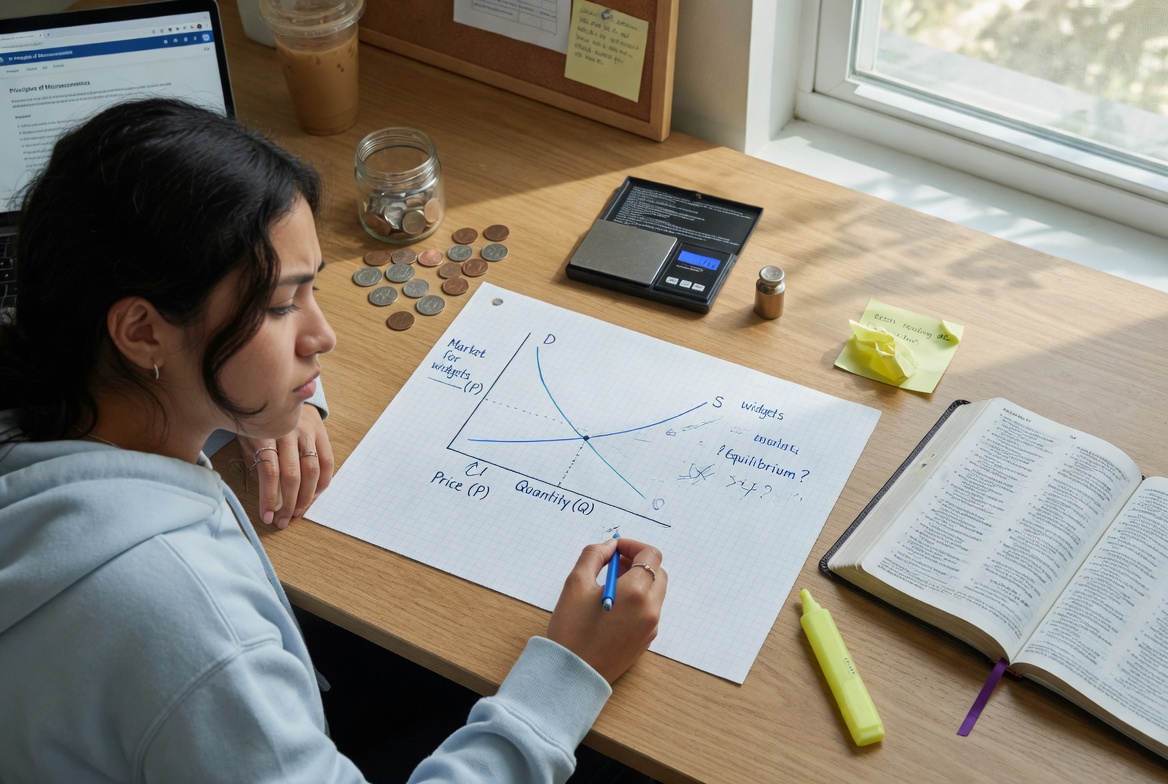
A better approach starts with foundational concepts and lets the student reason from there.
What happens when you fix the price of something below its market value? Work through it. There are sellers who would have sold at the higher price. There are buyers who now want more than is available. What follows? Shortage follows. That is not a political opinion. That is a logical consequence.
What happens when you fix the price above the market value? There are sellers who want to sell more than buyers want to buy. What follows? Surplus follows. Again, not politics. Logic.
Now apply this to wages. A minimum wage is a price floor on labor. What does a price floor create? The student already knows: surplus. In this case, surplus labor is unemployment. They did not need to be told the minimum wage causes unemployment. They reasoned their way there from principles they already understood.
But the lesson does not stop there. A good curriculum then asks: Why do people support minimum wage laws? Because they see workers struggling and want to help. That impulse is not wrong. The question is whether this particular tool accomplishes what its supporters intend. The student who can engage that question honestly is far better equipped than the student who was simply told the answer.
Freedom as the Default, Coercion as the Exception

There is a principle that underlies sound economic thinking and sound political thinking alike: freedom is the natural right of every person, and any restriction on that freedom requires justification.
This is not libertarianism dressed up as curriculum. It is a framework for honest analysis. When a government policy restricts what people can do with their own labor, property, or resources, the question is not "Is this restriction popular?" The question is "Is this restriction justified?"
Sometimes the answer is yes. No serious person argues that fraud should be legal or that contracts should be unenforceable. But the burden of proof lies with the one proposing the restriction, not with the one exercising the freedom.
Teaching children this framework does not tell them what to conclude about any specific policy. It gives them a tool for evaluating every policy they will ever encounter.
What This Looks Like in Practice
A child studying trade policy does not simply learn "tariffs are bad" or "tariffs protect American jobs." They learn what a tariff does: it raises the price of imported goods, which benefits domestic producers of that good but harms domestic consumers of that good and every other domestic industry that uses that good as an input. Then they weigh the tradeoffs. Then they form a judgment.
A child studying taxation does not simply learn "taxes are theft" or "taxes are the price of civilization." They learn what a tax does to incentives, what happens to the revenue, who bears the actual burden (which is not always who writes the check), and what alternatives exist. Then they evaluate.
This approach takes more time than handing children a conclusion. It requires patience. But it produces adults who can think about economics rather than merely repeat economics.
Why This Matters for Christian Families
Scripture has much to say about wealth, poverty, generosity, justice, and the proper use of resources. A child who has been trained to think carefully about economic principles is far better equipped to integrate biblical wisdom into their economic understanding than a child who has merely absorbed a political position.
The goal is not to produce little capitalists or little socialists. The goal is to produce careful thinkers who can handle complexity, engage opposing views with integrity, and build their convictions on something stronger than "my textbook said so."
GraceHaven Academy includes an economics curriculum built on exactly this foundation. It teaches children how to think about economics rather than what to think about it. That is a meaningful difference. Explore the curriculum and enroll as a founding family at https://www.gracehaven.ai/academy.