
Ask a child why lying is wrong and listen carefully to the answer. Most curricula have trained children to say "because it hurts people" or "because there is a rule against it." Both answers sound reasonable. Neither one reaches the actual question.
Because the real question is not which things are wrong. The real question is what makes anything wrong at all. A child who can list the rules has not yet thought about ethics. He has only memorized a list. The moment someone clever asks him why the rules are the rules, he is finished.
This is the question that matters most.
What Makes Anything Right at All
There is a famous puzzle, old as Plato, that exposes the problem in a single sentence.
Is something good because God commands it, or does God command it because it is good?
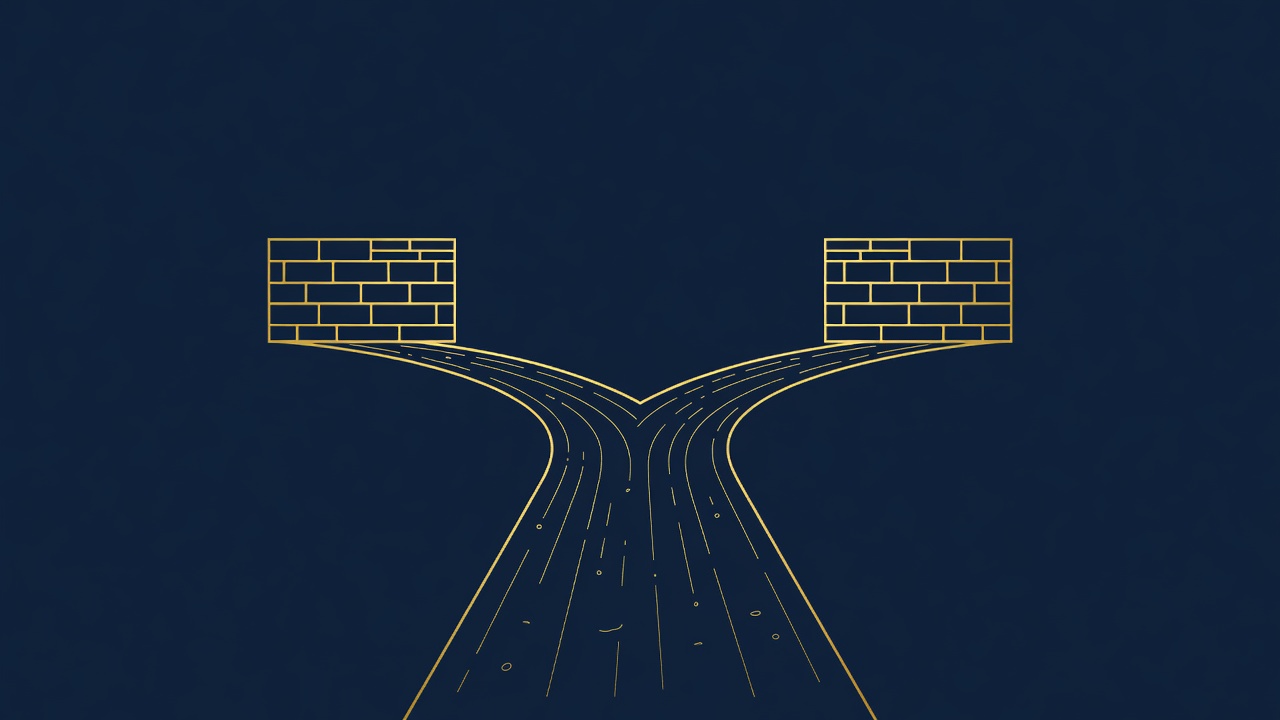
It looks like a simple either-or, and most people pick a side without noticing the trap. But each side, followed honestly, leads somewhere a thinking person cannot go. The puzzle is not a curiosity for philosophers. It is the hinge on which every claim about right and wrong actually turns, and a child who has never been walked through it has never really examined what he believes.
The Two Answers That Both Fail
Take the first answer. Suppose things are good simply because God commands them, with no reason behind the command. Then goodness is arbitrary. If God had commanded cruelty, cruelty would be good, which is something almost no one is willing to say. Goodness has become a coin flip, and a coin flip is not goodness.
Take the second answer. Suppose God commands things because they are already good, by a standard that exists independently. Then that standard, not God, is the real authority. Goodness sits above God like a law He must consult, and the foundation has moved somewhere else entirely.
Both answers fail. One makes goodness arbitrary. The other makes it independent. A student who sees clearly why each horn fails has learned more about ethics than a student who memorized a hundred rules, because he now knows what the rules would have to rest on to mean anything.
Goodness Has a Source
The way through is not a third option between the two answers. It is a recognition that dissolves the choice.
Goodness is not a rule God invents, and it is not a standard above Him that He obeys. Goodness flows from who God is. His commands are the expression of His own character, not arbitrary decrees and not deference to some external measure. Ask where goodness comes from, and the answer is neither "from a rule" nor "from a standard outside God," but "from God Himself, who is good."
This changes what wrong even means. Wrong is not first a rule broken. Wrong is a departure from the character of the One who is good. That reframing reaches deeper than any list of prohibitions. It catches the person who keeps every visible rule while nursing contempt in his heart, the person the rulebook can never quite convict. A child who learns ethics this way is not memorizing a code. He is learning to recognize what goodness is and where it comes from.
Teaching the Student to Ask the Right Question
The goal is not a child who can recite the rules. The goal is a child who can ask what the rules rest on, who can see why the easy answers fail and who understands that goodness has a source rather than a committee.
That is harder than handing a child a list of dos and don'ts. It is also the difference between a student who behaves when watched and a student who has actually understood right and wrong.
GraceHaven Academy teaches ethics from exactly this footing. The question behind the questions, the dilemma that exposes the easy answers and goodness grounded in the character of God rather than in arbitrary rules or an outside standard. The Ethics curriculum is part of the Academy lineup, with more being built.
Stay Updated
We are writing more on how each subject can be taught with this kind of integrity. No spam, no marketing fluff. Just notes on raising children who can think.