In most homeschool curricula, music is an afterthought. If it appears at all, it is either performance (learn to play an instrument) or appreciation (listen to this piece and write a paragraph about how it makes you feel). Both have their place. Neither is education in any serious sense.
Music is one of the oldest and richest subjects in the classical tradition. It was part of the quadrivium, the four mathematical arts, alongside arithmetic, geometry, and astronomy. The ancients understood something that modern education has forgotten: music is not merely artistic expression. It is a window into the structure of creation itself.
Music and Mathematics
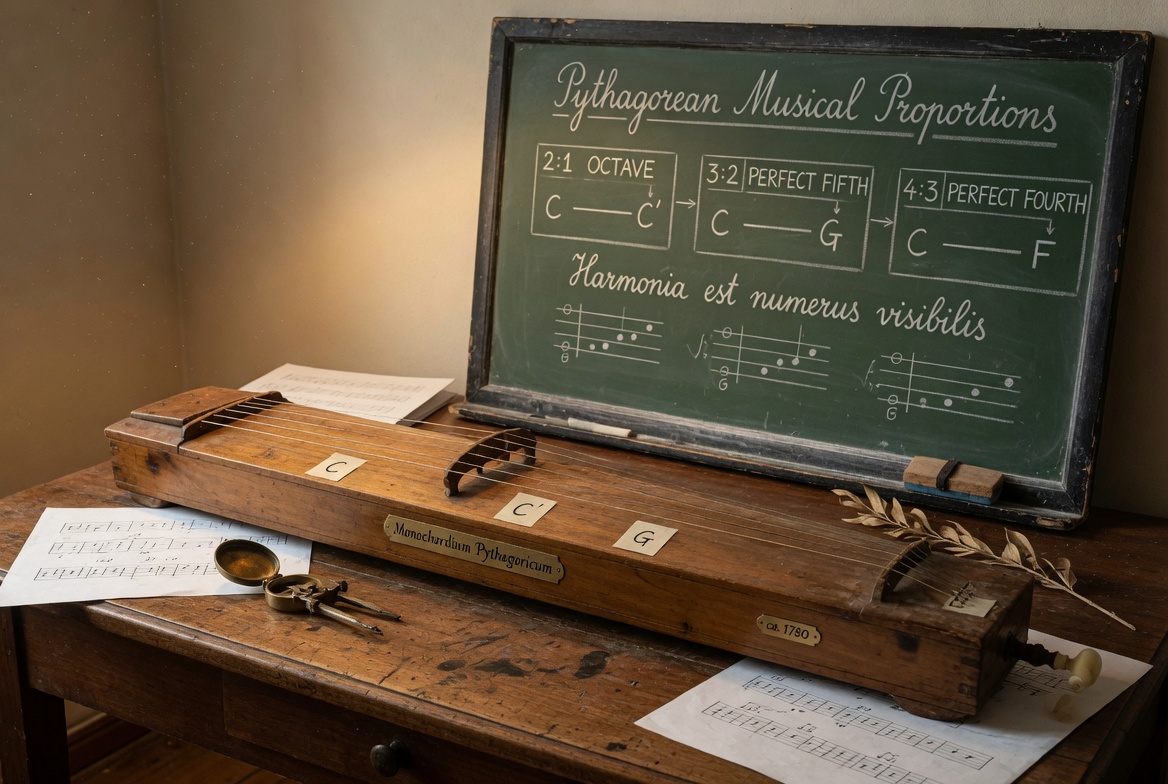
The relationship between music and mathematics is not metaphorical. It is literal.
When you pluck a string and then press it at exactly the halfway point and pluck again, the second note is one octave higher. The ratio is 2:1. Press at one-third and you get a perfect fifth. The ratio is 3:2. Press at one-quarter and you get a perfect fourth. The ratio is 4:3.
Pythagoras discovered this over two thousand years ago, and it remains true. Musical harmony is mathematical proportion made audible. When a chord sounds "right," it is because the frequencies of the notes relate to each other in simple whole-number ratios. When it sounds "wrong," those ratios are complex or dissonant.
A child who learns this does not just understand music better. They understand mathematics better. They begin to see that math is not an abstraction imposed on the world but a description of patterns already present in it.
Music and Theology
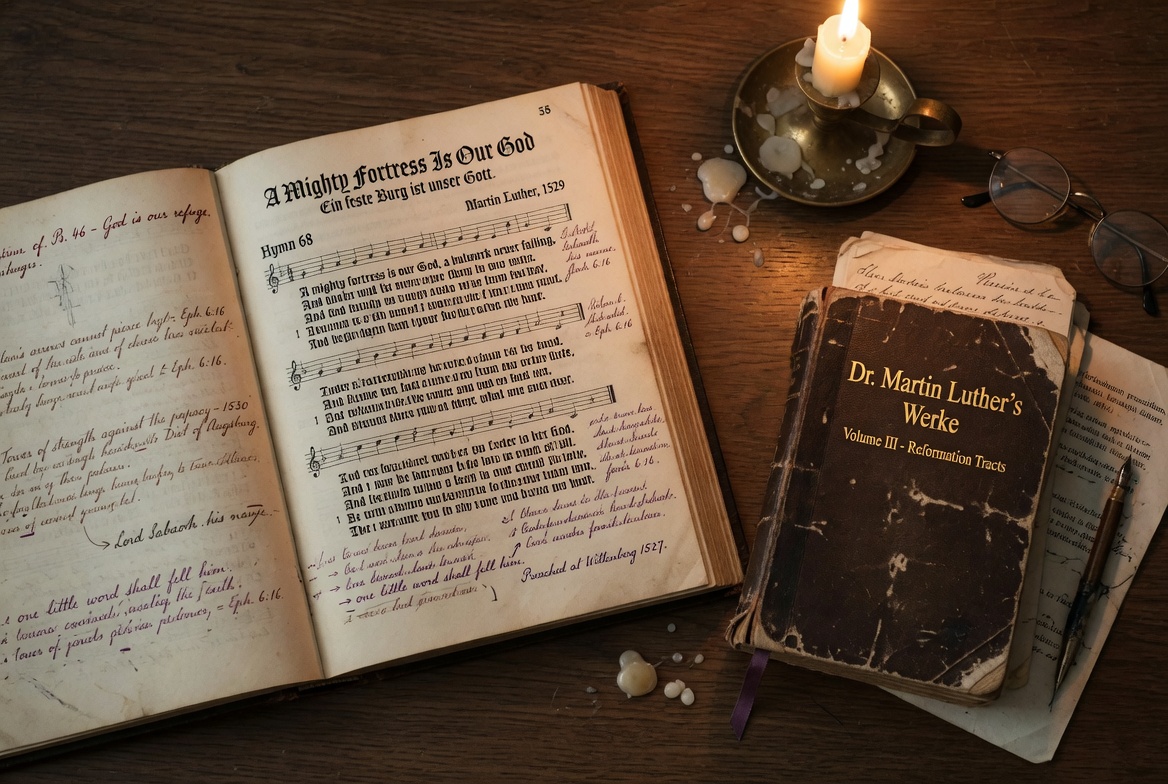
The Christian tradition has always understood music as more than entertainment. Augustine wrote that "he who sings prays twice." Luther called music "a gift of God, not a gift of men." The Reformers did not merely permit congregational singing. They insisted on it, because they understood that singing truth shapes the soul in ways that merely hearing it does not.
The great hymns of the church are theological education set to music. "A Mighty Fortress Is Our God" is a lesson in the sovereignty of God over evil. "When I Survey the Wondrous Cross" is a meditation on the atonement that has formed Christian understanding for three centuries. "Be Thou My Vision" is a prayer for right ordering of the soul's affections.
A child who learns these hymns, not just the melodies but the words, the theology, the historical context, is receiving a richer theological education than many adult Bible studies provide.
Music and Culture
Music also provides a unique lens on history and culture. The music a civilization produces reveals what it values, what it fears, and what it loves.
Medieval plainchant reveals a culture oriented toward the transcendent, where beauty was understood as a reflection of divine order. Baroque music reveals a culture that delighted in complexity, ornamentation, and the interplay of structure and freedom. The shift from sacred to secular dominance in Western music tracks the broader cultural shift away from a God-centered worldview.
A child who studies music history alongside political and intellectual history gains a dimension of understanding that is unavailable through text alone. They hear what a culture believed, not just what it wrote.
What a Real Music Curriculum Looks Like
A serious music curriculum integrates theory, history, theology, and practice. It does not merely teach children to read notes on a page, though it does that. It teaches them why the notes relate to each other the way they do. It teaches them to hear the theology in a hymn and the worldview in a symphony. It connects music to mathematics, to worship, and to the broader story of Western civilization.
This is music education as it was understood for centuries before it was reduced to "enrichment."
Available Now
GraceHaven Academy includes a music curriculum that treats music as a serious subject. Not a break from real learning, but a part of it. Theory, history, hymnody, and the deep connections between music, mathematics, and the God who authored both. You can explore the curriculum and enroll as a founding family at gracehaven.ai/academy.