Most history curricula for children share a common flaw: they have already decided what the student should think.
Conservative curricula tend to present the American founding as an unqualified triumph. Progressive curricula tend to present it as an unqualified injustice. Both flatten a complex reality into a simple narrative. Both produce students who know the approved story but cannot engage the actual history.
The Problem With Narrative History
History told as narrative is powerful. It is also dangerous. Every narrative has a narrator, and every narrator makes choices about what to include, what to omit, and how to frame what remains.
A curriculum that tells the story of the American Revolution as "brave colonists threw off tyranny" has made a choice. It has chosen to emphasize the colonists' grievances and downplay the complexity of their motives. A curriculum that tells the same story as "wealthy slaveholders rebelled over taxes" has made the opposite choice. Both contain truth. Neither is the whole truth.
A child educated by either narrative alone will be blindsided the first time they encounter the other one. And they will encounter it, whether in college, in a book, or in a conversation with someone who learned a different version.
What Honest History Looks Like
Honest history does not avoid conclusions. It insists that conclusions be earned rather than assumed.
Take the American founding. An honest curriculum will teach that the founders articulated principles of liberty that were genuinely revolutionary. It will also teach that many of those same founders owned slaves, creating a tension between their ideals and their practice that the nation would take strife and the shedding of blood to begin resolving.
These are not contradictory facts that cancel each other out. They are the actual history. A student who grapples with both is better educated than a student who has been given only one.
The same applies to every period. The Reformation was a recovery of biblical truth and a source of political upheaval and violence. The Industrial Revolution created unprecedented prosperity and unprecedented human suffering. The Civil Rights Movement was driven by deep Christian conviction and by complex political coalitions with competing agendas.
Flattening any of these into a simple story robs the student of the opportunity to think.
Primary Sources Over Textbook Summaries
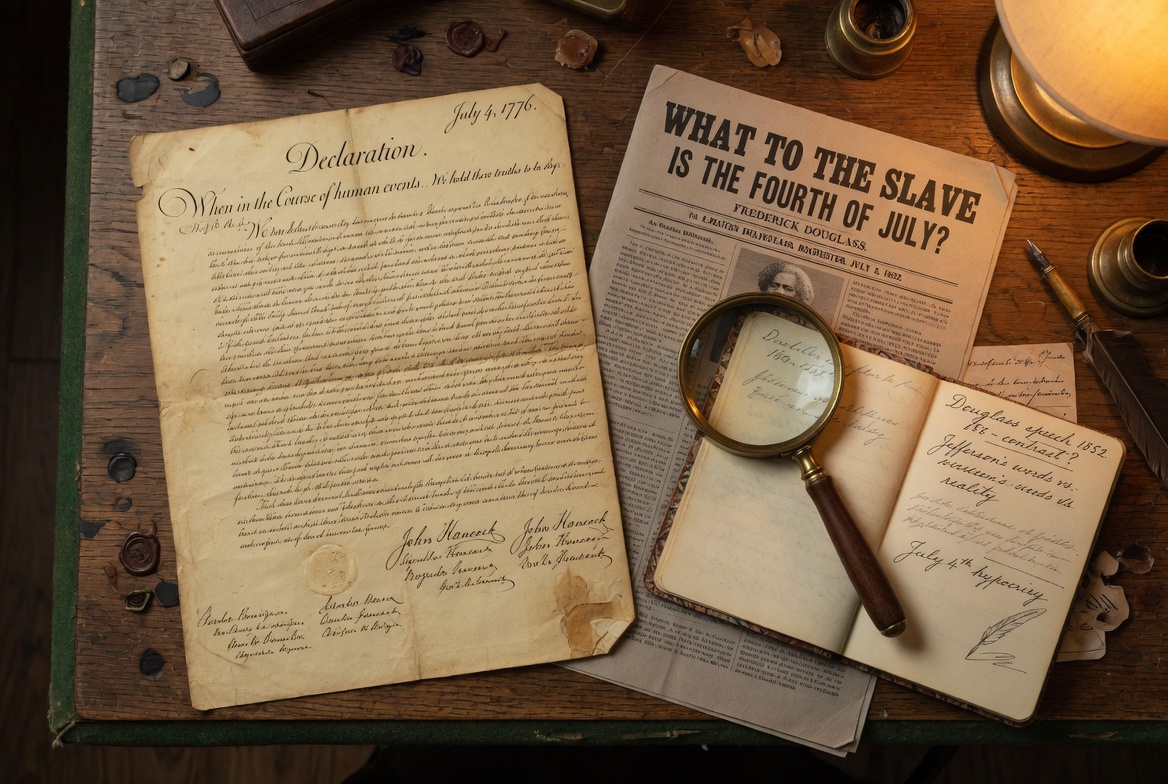
One of the most effective tools in history education is the primary source. Let the student read what the people actually wrote and said, rather than what a textbook author says they wrote and said.
A child who reads the Declaration of Independence does not need a textbook to tell them what it says. They can read it themselves. Then they can discuss it: What does Jefferson mean by "self-evident"? What does "created equal" mean in a document signed by slaveholders? Is the list of grievances persuasive? Which ones seem strongest?
A child who reads Frederick Douglass's "What to the Slave is the Fourth of July?" encounters a mind that deeply loved the principles of the founding and deeply condemned the nation's failure to live up to them. That is a more powerful and more honest education than any textbook summary could provide.
Primary sources teach children that historical figures were real people with real arguments, not cardboard characters in a predetermined story.
Providence, Not Propaganda
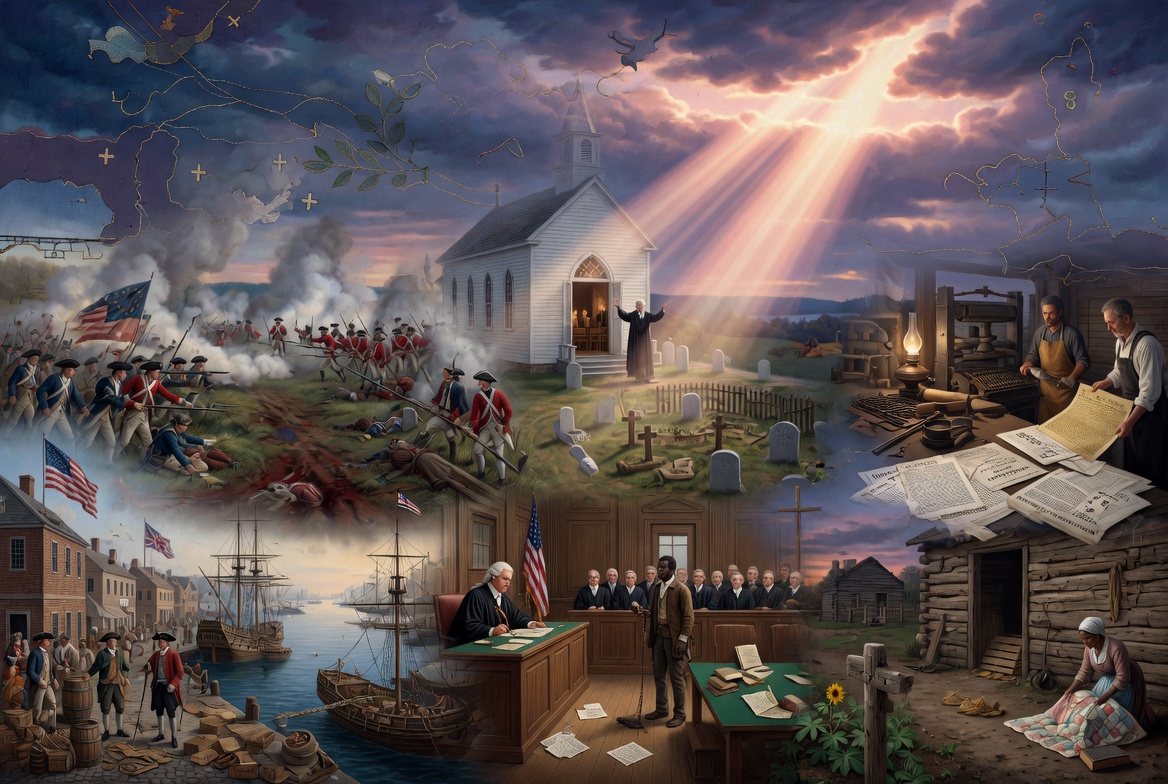
For Christian families, there is an additional dimension. Christians believe that God is sovereign over history. He raises up nations and brings them down. He works through flawed people to accomplish His purposes.
This belief should make Christians more honest about history, not less. If God is sovereign, we do not need to sanitize the past to protect His reputation. We can look honestly at the failures of Christian nations, Christian leaders, and Christian movements, because God's purposes do not depend on human perfection.
A curriculum that whitewashes history is not honoring God. It is protecting an idol: the idol of a perfect Christian heritage that never existed. The real story, with all its complexity, is far more compelling. It shows God working through broken people in a broken world, which is the story of Scripture itself.
Available Now
GraceHaven Academy includes history curricula, both American and world, that teach students to engage the past honestly. Primary sources, honest complexity, and the confidence that God's providence does not require our sanitizing. You can explore the curriculum and enroll as a founding family at gracehaven.ai/academy.